
Introduction
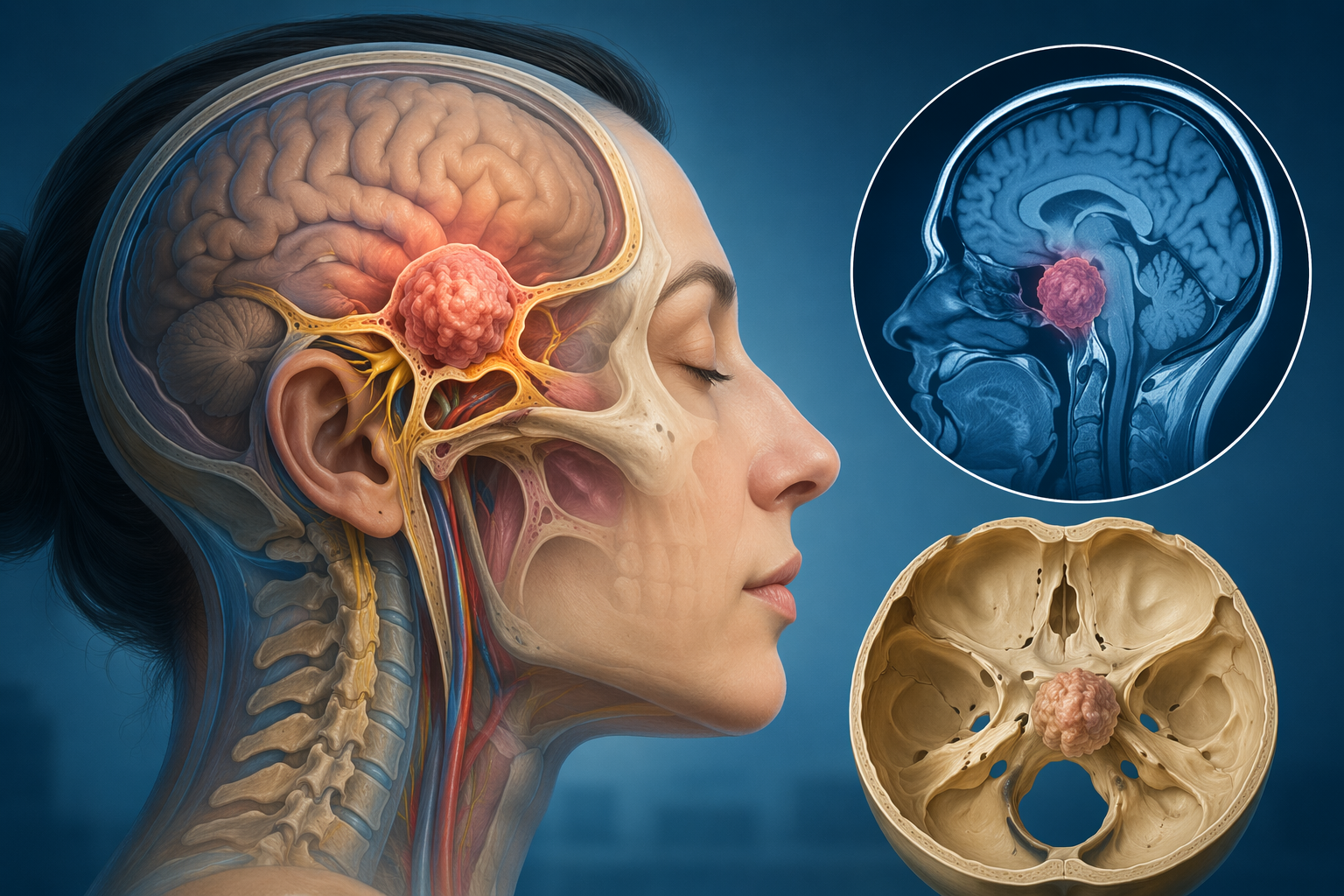
Skull base tumors are rare but serious conditions that develop at the base of the skull, an area that supports the brain and connects many important nerves and blood vessels. Because of their location, even small tumors can affect vital functions like vision, hearing, and movement. Understanding these tumors can help patients seek timely medical care and improve outcomes.
What Are Skull Base Tumors?
Skull base tumors are abnormal growths that occur in the bones or tissues at the bottom of the skull. These tumors can be:
- Benign (non-cancerous) – slow-growing and less aggressive
- Malignant (cancerous) – faster-growing and may spread
Even benign tumors can cause problems due to pressure on nearby nerves and structures.
Types of Skull Base Tumors
Some common types include:
- Pituitary tumors
- Acoustic neuromas
- Meningiomas
- Chordomas
- Nasopharyngeal tumors
Each type affects different areas and may show different symptoms.
Causes and Risk Factors
The exact cause of skull base tumors is not always known. However, some factors may increase the risk:
- Genetic conditions
- Exposure to radiation
- Family history of tumors
- Age-related changes
Symptoms of Skull Base Tumors
Symptoms can vary depending on the tumor’s size and location. Common signs include:
- Persistent headaches
- Vision problems or double vision
- Hearing loss or ringing in the ears
- Difficulty in swallowing or speaking
- Facial numbness or weakness
- Balance issues
These symptoms may develop slowly, so they are often ignored in the early stages.
How Are Skull Base Tumors Diagnosed?
Doctors use advanced tests to diagnose these tumors, such as:
- MRI (Magnetic Resonance Imaging)
- CT scans
- Endoscopic examinations
- Biopsy (in some cases)
Early diagnosis helps in better treatment planning.
Treatment Options for Skull Base Tumors
1. Surgery
Surgical removal is often the main treatment. Advanced techniques like endoscopic (minimally invasive) surgery reduce risks and recovery time.
2. Radiation Therapy
Used to shrink or control tumors, especially when surgery is not possible.
3. Medication and Monitoring
In some cases, doctors may monitor slow-growing tumors or use medicines to manage symptoms.
Recovery and Follow-Up Care
Recovery depends on the type of tumor and treatment method. Regular follow-ups are important to monitor progress and prevent recurrence. Rehabilitation may also be needed to restore functions like speech or balance.
When Should You See a Doctor?
You should consult a specialist if you experience:
- Ongoing headaches
- Sudden vision or hearing changes
- Difficulty in speaking or swallowing
- Unexplained neurological symptoms
Early medical attention can make a significant difference in treatment success.
Conclusion
Skull base tumors may be complex, but with early diagnosis and expert care, many cases can be managed effectively. Awareness of symptoms and timely consultation are key to better outcomes.
If you notice any warning signs or have concerns, do not delay seeking medical advice. Expert evaluation and advanced treatment options can help ensure the best possible care and recovery.