
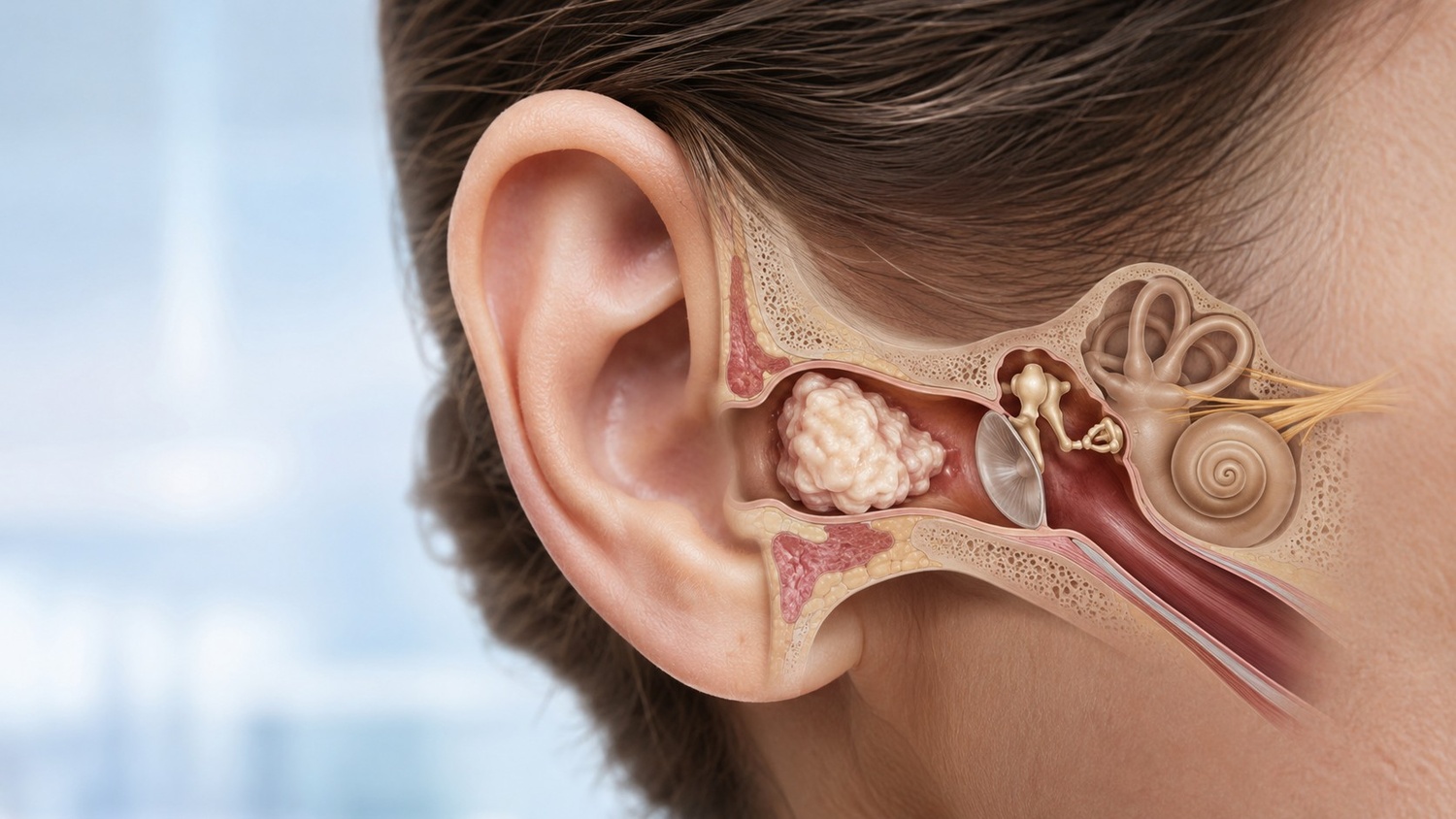
A persistent ear discharge or gradual hearing loss may seem like a simple ear infection. But sometimes, these symptoms can point to a less common condition called cholesteatoma.
Cholesteatoma is an abnormal collection of skin cells that develops inside or near the middle ear. Although it is not cancer, it can continue to grow and damage the delicate structures responsible for hearing and balance. Early diagnosis and timely treatment are important to prevent complications.
What Is Cholesteatoma?
A cholesteatoma usually forms behind the eardrum. As skin cells collect over time, the growth can become larger and affect the tiny bones of the middle ear.
Some people are born with the condition, but it can also develop later, particularly in connection with repeated ear infections or problems affecting the eardrum.
What Are the Symptoms of Cholesteatoma?
The condition often develops gradually, and the early symptoms can be mistaken for a routine ear problem.
Common cholesteatoma symptoms include:
- Persistent or foul-smelling ear discharge
- Gradual hearing loss, usually in one ear
- Ear pain or pressure
- Repeated ear infections
- Ringing in the ear (tinnitus)
- Dizziness or balance problems
A discharge that keeps returning despite treatment should not be ignored. An ENT evaluation can help identify the underlying cause.
Why Can Cholesteatoma Be Dangerous?
As a cholesteatoma grows, it may damage the tiny bones of the middle ear and lead to worsening hearing loss. In more advanced cases, it can affect structures involved in balance or the facial nerve. Rare complications may involve the spread of infection beyond the ear.
This is why early diagnosis matters, even when the symptoms initially appear mild.
How Is Cholesteatoma Diagnosed?
An ENT specialist will carefully examine the ear and eardrum. Depending on the findings, further tests may include:
- Detailed ear examination using specialised equipment
- Hearing tests to assess the level of hearing loss
- CT scan to understand the extent of the condition
These investigations help the ENT specialist determine how much of the ear is affected and plan the appropriate treatment.
What Is the Treatment for Cholesteatoma?
In most cases, cholesteatoma treatment involves surgery to remove the abnormal growth and protect the ear from further damage. Ear drops or other treatments may also be advised to control an active infection or discharge before further treatment.
The exact surgical approach depends on the size and location of the cholesteatoma and whether nearby ear structures have been affected. Some patients may also require long-term follow-up because the condition can return or require further evaluation after treatment.
When Should You See an ENT Specialist?
Consult an ENT specialist if you experience:
- Ear discharge that does not go away
- Repeated ear infections
- Gradual hearing loss in one ear
- Persistent ear pain
- Dizziness or balance problems
Do not assume that every recurring ear problem is just another infection. A proper examination can help detect conditions such as cholesteatoma before they cause further damage.
Protect Your Hearing with Timely ENT Care
Cholesteatoma may be a hidden ear condition, but its effects on hearing can become serious if treatment is delayed. Early diagnosis can help protect the delicate structures of the ear and reduce the risk of complications.
For persistent ear discharge, hearing loss, or recurrent ear infections, consult the ENT specialists at Royal Pearl ENT Hospital in Chennai for proper evaluation and personalised treatment.
Book an ENT consultation today.
Nungambakkam: +91 7845480555
Thiruvanmiyur: +91 9942214555